Your inheritance is still learning
Pawel Halicki
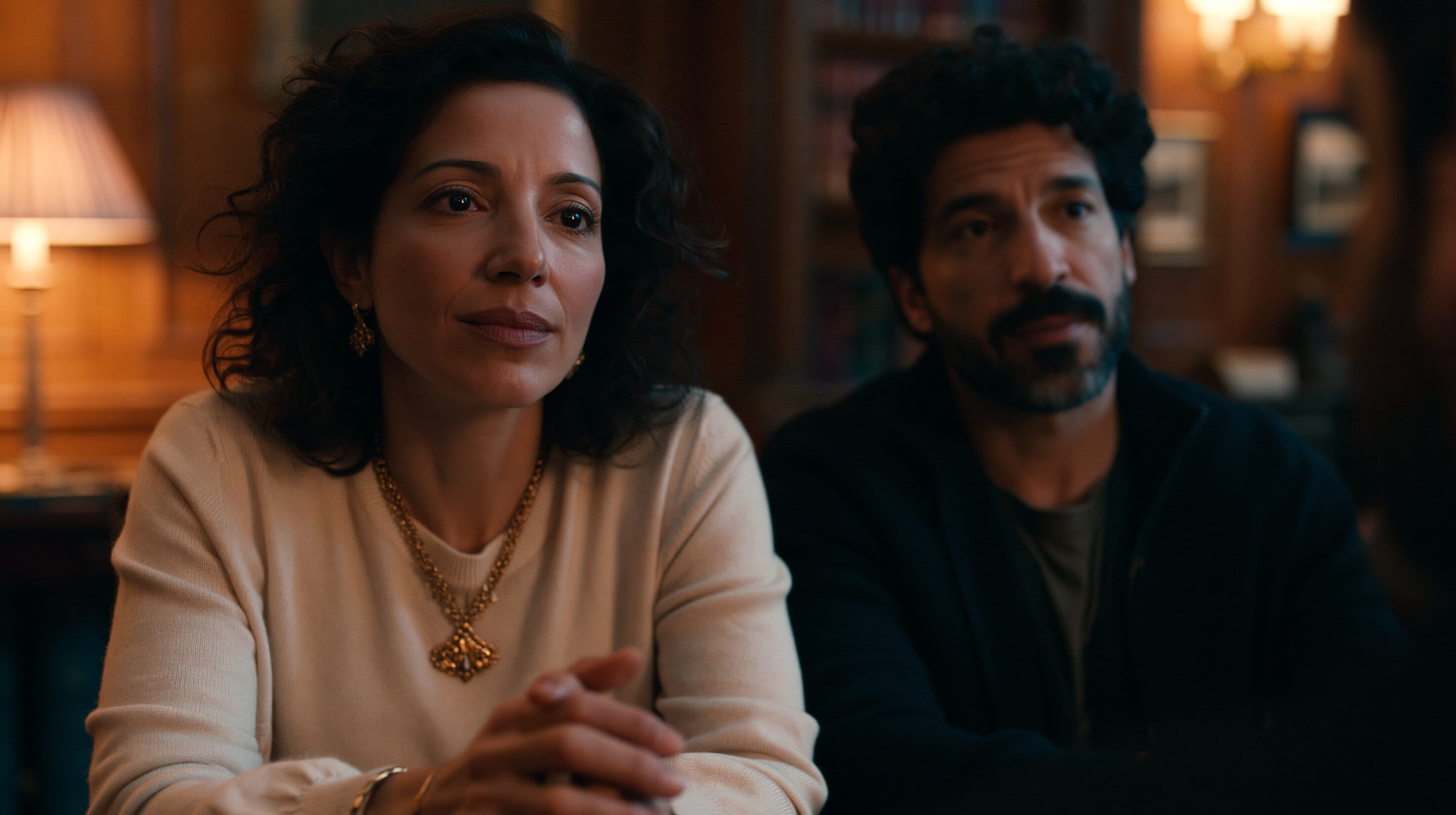
Lights shift to a softer amber as they step into the notary’s office. This room knows how to soften a hard decision. Or many. After two handshakes and no small talk, the siblings sink into the armchairs across the notary’s desk.
- Before we begin, I should let you know that your mother’s cognitive profile generated over three thousand transactions since her passing. No action exceeded her pre-approved limits. Mostly micro-investments and charitable donations.
- She’s only been gone for a month.
- The profile doesn’t expire with the person. The person is gone, but the avatar keeps acting on learned patterns until its autonomy window ends. Think of it as unfinished sentences. Her data is still finishing them.
- Can you just tell us what this is? She always planned everything: what we’d get and when.
- Mum always said inheritance should arrive when you need it, not when someone dies.
The notary places both palms on the desk. The dark wood surface subtly shifts in colour, and a branching inheritance map appears across the wood, blooming with provenance tags.
- Her physical estate is straightforward, and her will executed all transfers autonomously. That part is done. What we’re here to discuss is her behavioural estate.
- Behavioural estate?
- Different firms call it differently, but in plain terms it comes down to twenty-two years of decision patterns, taste calibrations, risk tolerances. Current market value is about four times her savings account.
- How is that possible?
- Your inheritance is still learning. Your mother was a remarkable decision-maker. Consistent results like hers are rare, and rare data can be licensed.
- This doesn’t feel right. Can we just archive it?
- You can freeze outbound connectors or mute social outputs. Archiving is the final step.
- You really want to delete the most accurate version of her that exists?
- It’s not her. It’s a statistical residue.
She leans forward.
- That statistical residue sent my niece a birthday message last week. She cried.
- Birthday messages are allowed under her family-contact clause.
The notary waits for the silence, then switches to a new screen.
- Under the Posthumous Agency Act, I’m required to present all options before any irreversible choice. This avatar passed tamper and spoof checks at 08:12 this morning, so there’s a third option beyond archiving or splitting.
Another chart ripples through all shades of wood on the dendro-ink display.
- A time-limited research license. In that situation, her avatar folds into a longevity study, including cognitive decline detection. But that requires severing all connectors and no more personal messaging.
His sister is the first to speak.
- She could still be helping people.
- Her data would be helping people.
A brief nod from behind the desk.
- And that distinction matters for tax purposes.
- Remember what the estate audit flagged? Six months before her diagnosis, the profile’s risk tolerance shifted significantly. She moved everything into capital-preservation instruments, and wiped the reason trace. They come due this month.
- She knew.
He shifts in his seat.
- The profile knew.
- Maybe she sensed it first. Maybe the model did. No one in my profession can yet prove what happens first.
- Okay, and what happens if we just... leave it running?
- Cascading maintenance fees begin to apply. And there’s a posthumous agency sunset clause. After thirty-six months of biological inactivity, every avatar enters legacy mode, sealing the model into read-only preservation. Essentially, it stops learning and starts preserving.
- It ages.
- More like the data fossilises.
- Then we still have time to decide.
- Yes.
The notary exhales, swiping the display back to solid wood.
- She thought of that too.
- Of course she did.

Memories to build from this future:
Try to recall the last time a recommendation landed almost too close to home. A song you would have picked. A reply already half-written. A small choice telegraphed before you'd made it. For a second, the shape of how you decide was sitting outside you, somewhere quietly learning.
Now, hold that moment of being read:
Try to recall the morning your cognitive profile flagged something about your future you hadn't yet noticed about yourself.
Where were you when you saw the flag, and how long did it take to decide whether to trust it?
What part of you wanted to verify it against your own sense of things, and what part wanted to take its word?
How did your sense of knowing yourself change once a model could see your patterns moving before you did?
Think back to the project where your team kept consulting the behavioural avatar of a colleague who'd already moved on.
When the residue made a call that didn't land, who carried it: the colleague whose patterns ran it, the team running it now, or the model itself?
What changed about trusting your own judgment once a model could show you what they would have chosen?
Which decisions did your team start logging with a reason trace, knowing someone else might lean on it later?
Go back to the quarter your organisation set the rules for what happens to a behavioural estate when someone leaves: archive it, license it forward, or let the model fossilise into legacy mode.
What shifted in how your organisation values expertise once decision patterns kept working after people left?
How did your organisation know when an inherited pattern had stopped learning and started constraining what came next?
Where did your organisation draw the line between residue worth preserving and residue better left to fossilise?
To round this one off.
If you slowed down on one recurring decision this week, one you usually make on autopilot, what would you want to check about the reasoning behind it?
What small experiment with that would you be curious to try? And is there anything from this one that ties back to other sessions?