Would you like to notarise this evening?
Pawel Halicki
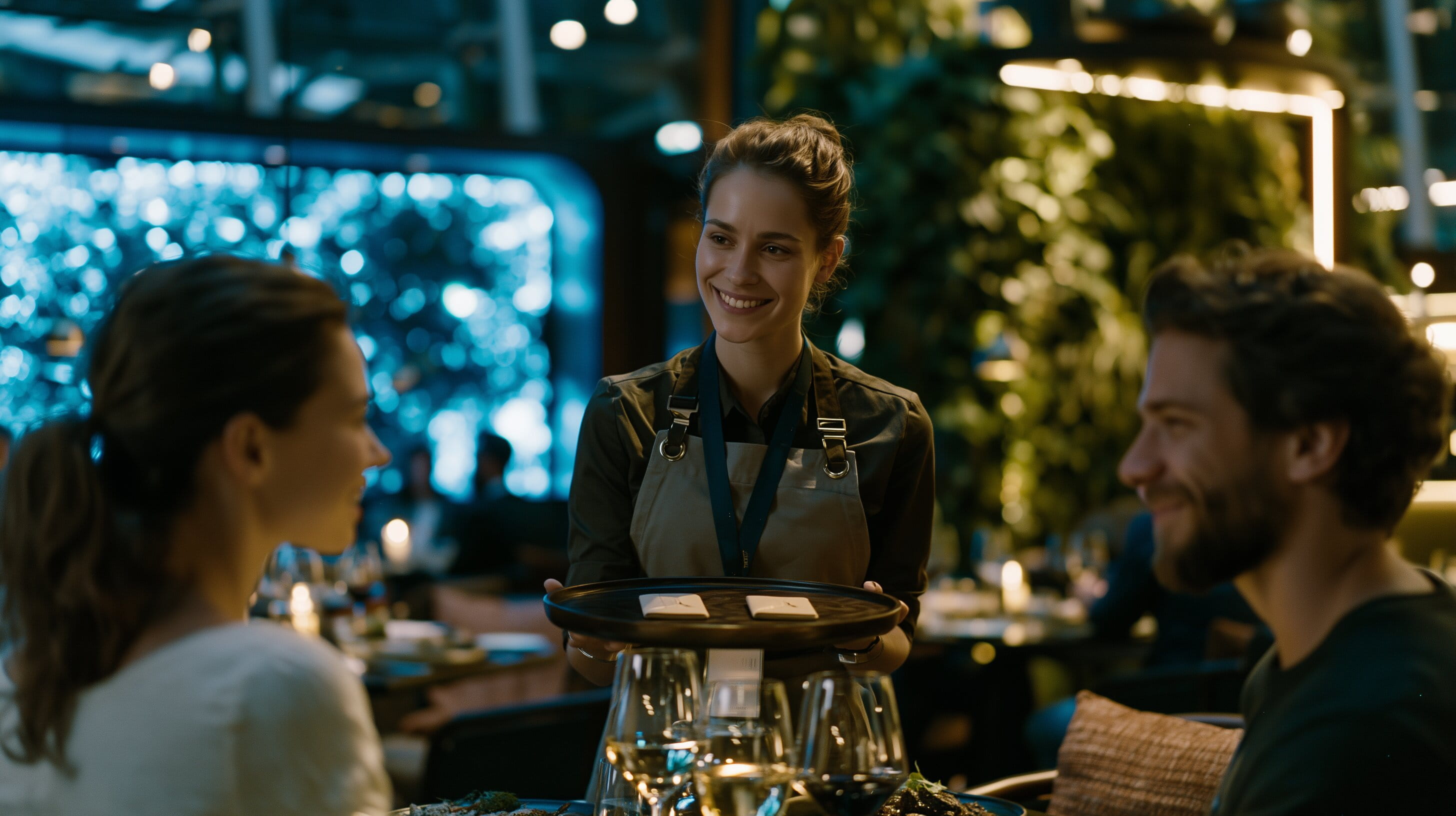
The bioluminescent plants in their cosy corner pulse softly, dimming and swelling as if the restaurant itself is breathing around them. This late, only three other tables are still buzzing with conversation. Their waiter approaches with the same gentle formality he used when suggesting the second wine pairing.
- I hope you had a great time tonight. Would you like to notarise this evening?
She reaches for his hand.
- Yes, let’s notarise this.
A small consent request blooms beside their glasses. She accepts first. He waits a beat, then taps his too, and smiles at their waiter.
- Well. Some nights deserve better than being left to memory alone.
- We had a lot of fun tonight. Everything was amazing.
- Thank you. We take overwhelming hospitality seriously here. I’m glad you decided to have your experience witnessed by our ambient notarisation service. These days, anyone can make a beautiful record. We specialise in real ones.
Their waiter taps twice at his wrist. Somewhere behind the kitchen wall, the restaurant’s provenance engine is already sealing the evening: the consented presence logs, the ambience profile, every course, every pour, every kitchen handoff. A chain of evidence that the evening had happened here, with them, in this order, sealed into the restaurant’s witness ledger as the verified state of the moment.
- Will our kitchen tour be included?
- Yes, madam. Full package. Here are your menus signed by the chef, with all food provenance listed. Once our trust chain clears, your record will be witnessed and sealed.
- Beautiful.
- Do you have your transport already?
- We’ll take a walk.
- Yeah. I could also use some ordinary air after all this.
- I’m glad you had an unforgettable evening. I’ll be back in a moment.
The waiter nods with understanding and disappears into the service corridor. He leans back in his chair, swirling wine, suddenly reluctant for it to end.
- I always thought some things stayed truer if they weren’t certified. That the uncertainty is part of the memory. The blur. The not-quite-remembering. The version that’s slightly wrong and slightly mine.
- And now?
- Well, that was before anything could be made to look real. Now it feels like the opposite.
- You can’t relive the moment, but you can verify that it was truly ours, and not just generated. I actually find that more comforting.
He looks at her.
- More comforting than reliving it?
- You can’t trust your memory. It rewrites itself a little every time you use it. But a notarised record gives you one thing that doesn’t keep changing with you. The thousandth time you open it, the evidence is still the same. Like a photograph but deeper.
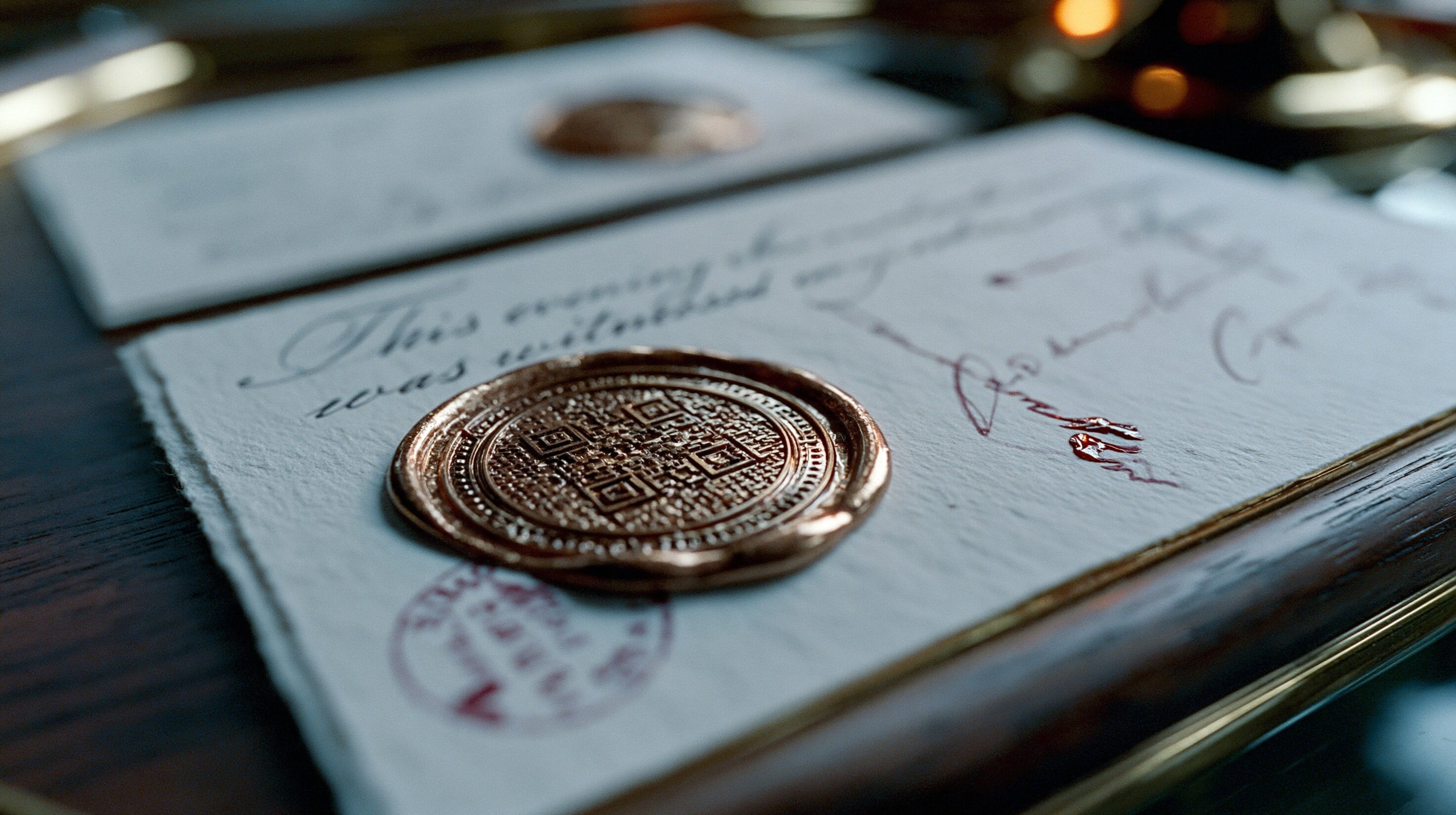
Their waiter is back with a dark wooden tray. On the tray: two small sealed cards, each with a pressed seal and a tiny credential mark catching the light.
- Your notarised evening is ready. The record is in your shared archive now. These are the physical anchors. Our chef has added a personal annotation to each, a note about the dish she felt most proud of tonight, and why.
- She writes them herself?
- Every evening. Her handwriting is certified, too. She writes it with a stabilised reduction made from the dish’s final sauce, so the ink carries the same provenance. It’s marked human-authored in the record. No assistants, no house model. The chef is quite strict about that.
She turns the card over. On the back, a blot covers a small inscription.
This evening was witnessed. Everything here happened as recorded.
- That line, does everyone get that?
- Every guest. It was the chef’s idea, actually. She felt that the technical certification was complete, but it lacked a statement of intent. She wanted guests to know that someone had cared enough to witness it properly.
He sets down his card.
- Someone cared enough to witness it properly. That might be the most romantic sentence I’ve ever seen attached to a bill.
Memories to build from this future:
Go back to a morning when you tried to remember the details of a day that mattered. The exact thing someone said. That look across a table. You could feel some of it slipping already, and part of you wished someone had been quietly paying attention to all of it, holding it for you.
Now, stay with the wish:
Try to recall an evening you notarised, sealing the proof of a real lived experience, not something that anyone could just generate.
What shifted about how present you felt once the place was witnessing the evening with you?
How did you decide which moments to seal and which were better left blurred?
Which did you trust more, the memory that kept rewriting itself or the witnessed version that stayed fixed?
Think back to when your team started logging every decision as a human call or a machine call, with each one sealed in the record.
How did your team decide together which calls had to stay yours and which were fine to hand to the machines?
What changed about how you trusted each other's judgment once every call was marked human or machine in the record?
Which kind of call did your team start protecting as a human one, even when the machines could make it just as fast?
Go back to a regular quarter once your organisation had introduced notarising the data that informed important decisions, not just the call itself.
What changed about how teams made decisions once the data behind each call was notarised alongside it?
How did people learn from past decisions once every notarised input could be traced back to where it came from?
Which types of decisions did you read differently once you could see every notarised signal that had shaped them?
Before we wrap up.
If you could trace every input behind your most important decisions, what would change about how you approached the next big one sitting in front of you?
What small thing would you be curious to test first? And does anything from this one connect to ideas from other sessions?