We finally desmarted the house
Pawel Halicki

A personal call slips over her workspace. Smiling at the caller’s name, she switches environments.
— Well hello there! A personal call from you? What’s the big occasion?
— Okay, don’t hate me, the kids’ camp got cancelled. The heatwave came four weeks early. They moved the older groups north, but they won’t relocate the juniors that far.
— Poor things. They must be devastated.
— Yeah, they were already packed. I’m trying to salvage the week. I thought maybe… we could take the house?
— As compensation for sailing camp?
— I’m still working on the pitch.
— There isn’t even a boat there.
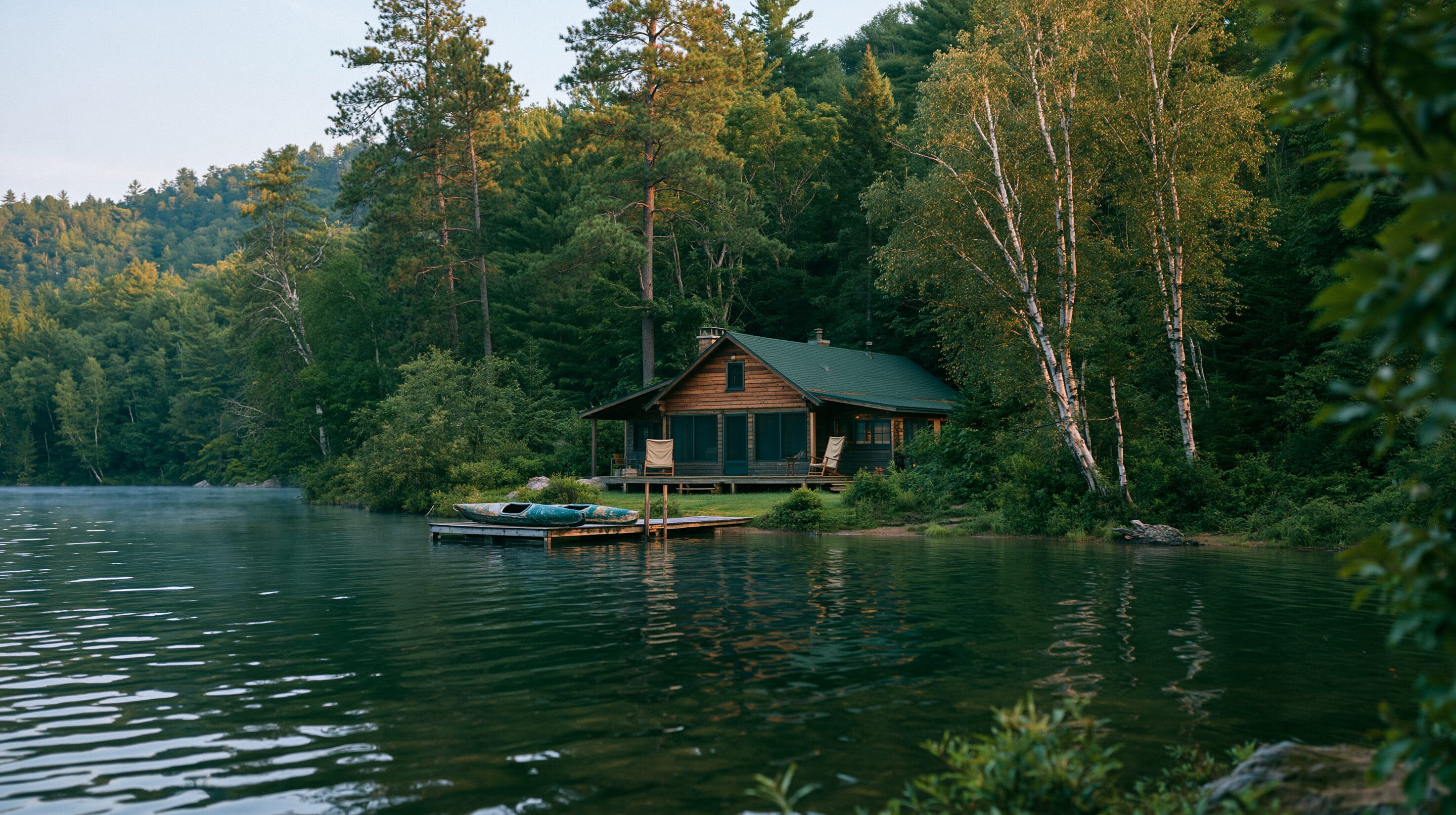
— There’s a lake, two kayaks, and a forest. We can bring bikes. I’ll tell them it’s like living on airplane mode for a week.
— Actually… that pitch might work better than you think. We finally desmarted the house.
— You actually did it?
— Over winter. The assistant is gone. All the smart stuff too. Even the pantry is dumb again.
— Wait. That makes it even better. They’ve never stayed anywhere that didn’t already know them.
— They’ll keep waiting for the place to figure them out. Sounds like a weird cabin adventure.
— I can sell that. Now it’s a challenge, not a consolation prize. They’ll think it’s an experiment.
— Mum says Dad’s been cooking there.
— Dad doesn’t cook.
— He does there.
— Why?
— No idea. Mum says he makes bread now.
— I’m not brave enough to try it.
— So. You want the next weekend?
— If you’re willing to swap.
— What’s in it for me?
— My both remaining weekends.
— Terrible trade. Two weekends plus you’ll power-wash the deck.
— A gift wrapped in chores? Do I sound that desperate?
— That’s my rate.
— Fine. And hey, thank you. This was going to be a very long week otherwise.
— I know. I was going to give it to you anyway. The deck was just to make you sweat for it.
Memories to build from this future:
Think about the last evening when wifi went down at home. Someone restarted the router twice. The little light kept blinking, the screens gave up one by one, and the place became quiet in a way it never is. Then someone put the kettle on, another person found the cards, and at some point you noticed you weren’t in any hurry for the wifi to work again.
Now, stay in that offline comfort:
Try to recall a regular evening when you walked into a friend’s home and it already had your favourite treat because it knew you were coming.
What did you stop having to ask for once your family and friends’ homes knew you as well as your own did?
When did you decide it was time to let your home count someone new as your friend?
Which things did you hold back from the homes of friends and family on purpose, so the people themselves could still ask or still surprise you?
Think back to the work your team always saved for the desmarted space, the one that took no notice of anyone or anything.
Which parts of that work went better when nothing was helping?
Where did your team’s attention go first, once nothing around you was adjusting to anyone?
What was your team’s usual takeaway from the desmarted space that they brought into the smart one?
Go back to a regular quarter when every shared space in your organisation adjusted itself to each person in it, so no two of you were ever quite in the same place.
Which old arguments disappeared once nobody had to share a setting?
What became easier about working next to someone whose idea of a good space was nothing like yours?
Where did people go when they wanted to be exactly in the same place as everyone else?
To round this one off.
If everything around you already knew what you liked, what would you still want to be asked about? What small thing would you try to keep for a conversation?
And is there anything from this one that connects to other sessions?