It’s time to reconsider your inputs
Pawel Halicki
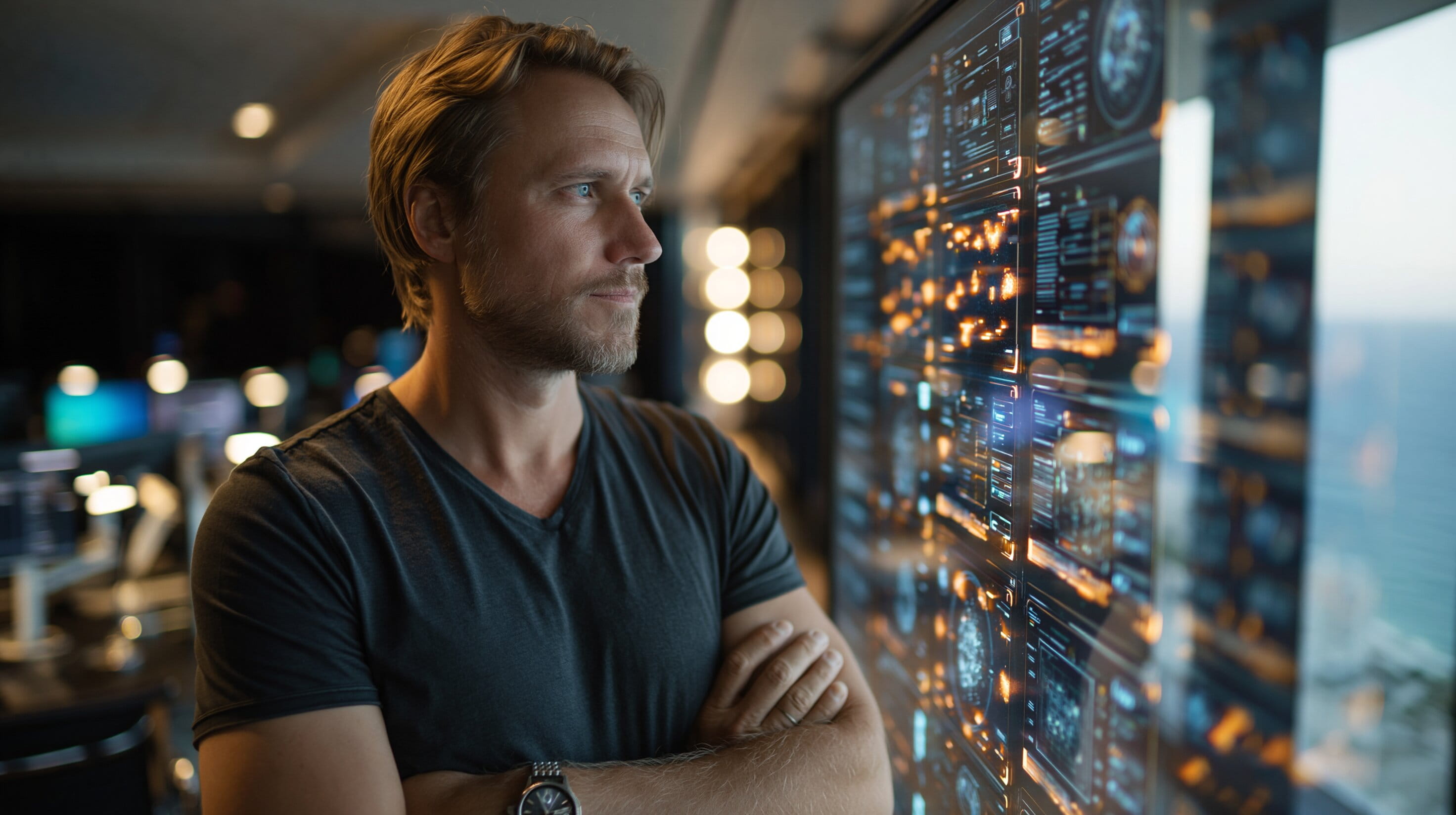
The workspace pings a collab request. He accepts. Their team lead pops in at the edge of his peripheral vision, her silhouette sharpening as the call syncs their work views.
- Hey, quick check-in. You’re formally past the rollout window.
- Nah. I’m just casually late.
He leans back from the console, arms crossed, waiting to be told what he already suspects.
- Your queue is stacked with twelve pre-generated product drafts. If they sit there, the dashboard reads like we’re shipping and then stalling, and ops will see our draft-to-approval rate drop on the weekly update tomorrow. What’s the holdup?
- Well, I keep starting and it comes out wrong.
- You realise our clients can tell the difference between yesterday and tomorrow? They see the data-cutoff stamp and the model version.
- I know, I know. I’m sorry. I just feel like I can’t tell which one is right because I never got clear on what right would feel like. I’ve kept tuning texture syncs, swapping sources and nudging meta feeds, but it’s not working.
He trails off, waiting for her to fill the silence. She doesn’t.
- Sounds like a clarity problem. You have progress, but you don’t trust it enough to ship. It’s time to reconsider your inputs.
- What exactly are you recommending?
- You can’t aim for what you can’t imagine.
He almost argues. Then he swipes through the drafts and scraps and decides not to.
- Stop gathering and start rendering. You’re drowning in raw material because you’re mistaking stockpiling for processing, like running a supply chain with no factory.
He freezes, squinting at her. That line sounded… pre-written.
- Wait, are you subprompting me right now?
He glances for the little assisted feed badge. Anything flagged gets logged. Nothing.
- Because that sounded like motivational botspeak.
- I’m not. You’re not lazy. You’re stuck in the same viewpoint, and you can’t see it from inside. Just adding more raw material won’t do anything. Turn material into constraints. Turn constraints into options you can actually compare by risk, effort, or impact.
He opens his mouth, but closes it as she continues.
- You’ve been feeding yourself the same angles for so long that you can only work with variations of what you already know. The drafts feel wrong because you can’t see what right would look like. Not yet.
One long pause and a deep sigh later, he finally responds.
- So what shall I do now?
His team lead relaxes a little.
- There it is. Now we can work with this. Pick one of those twelve drafts.
He stretches, accepting the challenge. His fingers move across the console and stop on one of the drafts.
- Okay. Now go to your saved-for-later pile of ideas you keep hoarding and never touch.
The view flips to his idea vault, where notes cluster by links and similarity. He selects a few filters and picks a heavily interconnected one.
- Got it.
- Now select Map Logic. It forces the draft to relate to the note.
- That will burn my remaining priority compute, and it feels rather random.
- Good. Random gets you unstuck. You’re not looking for logic. You’re looking for a new perspective. It’s worth it.
Once the system starts processing his input, three variant overlays snap onto the draft, like transparent skins you can toggle with a swipe to check the fit score and trace the source.
- Okay. I selected the Antarctic logistics proposal, and it’s translating staged acclimatisation into no sudden exposure.
- And?
- Look here. Draft seven, here. Wrong checkpoints, no thresholds. Now I can see the gap.
- So now you can revise.
- Oh no. Now I can choose. Thanks for digging me out of this hole.
- That’s what I’m here for. Get me a sign-off by the end of the day, and we’re even. See you around.
She waves and fades out, leaving him alone with his focus rising and new ideas already materialising.

Memories to build from this future:
Try to recall the last time you spent twenty minutes writing a short message. You changed a word, then put it back. Deleted half and started again. The version on screen wasn't wrong, exactly. You just couldn't say what right would have looked like.
Now, sit with what you couldn't picture:
Try to recall the evening you forced-mapped a stuck personal project to a random idea and saw the gap that was hiding.
What did the random pairing reveal that all your tuning never could?
How did it change the way you handle being stuck once a forced detour worked better than more raw material?
When did you realise you’d been generating variations because you couldn’t yet picture what right would look like?
Think back to the project where your team just overlaid solution variants and used the fit scores to choose between options instead of arguing in the abstract.
What changed about how disagreements landed once everyone could compare the same options with their fit scores side by side?
How did expertise apply differently once variants came built not just to choose from, but to help teams understand the problem faster?
When did your team realise weighing variants together did what hours of opinion-trading never could?
Go back to the quarter your organisation gave every team a compute budget, so exploring new directions carried a real cost.
What changed about how teams talked about new ideas once exploring each one came with a visible price tag?
How did people decide where to spend their compute once every direction had to earn it?
Which scattered habits quietly disappeared once chasing every angle had a real price?
To round this one off.
If fresh perspective really came from new inputs rather than more of the same, what would need to change about where you go looking the next time you're stuck?
What small experiment would you be curious to try? And does anything from this one tie to patterns you've been noticing across other sessions?