Narrative Microdosing is how you practise futures thinking and build your ability to navigate uncertainty. Instead of predicting whether this future will happen, you temporarily imagine that it already has.
Start with something familiar, then use the prompts to explore what this future could mean for you, the people around you, and the organisation or community you know. That turns an abstract future into specific possibilities, tensions, questions and language grounded in real life and work.
Repeat with more stories to build more futures you’ve already thought through, and more reference points for navigating change.
Three prompts. About 10 minutes. No right answers.
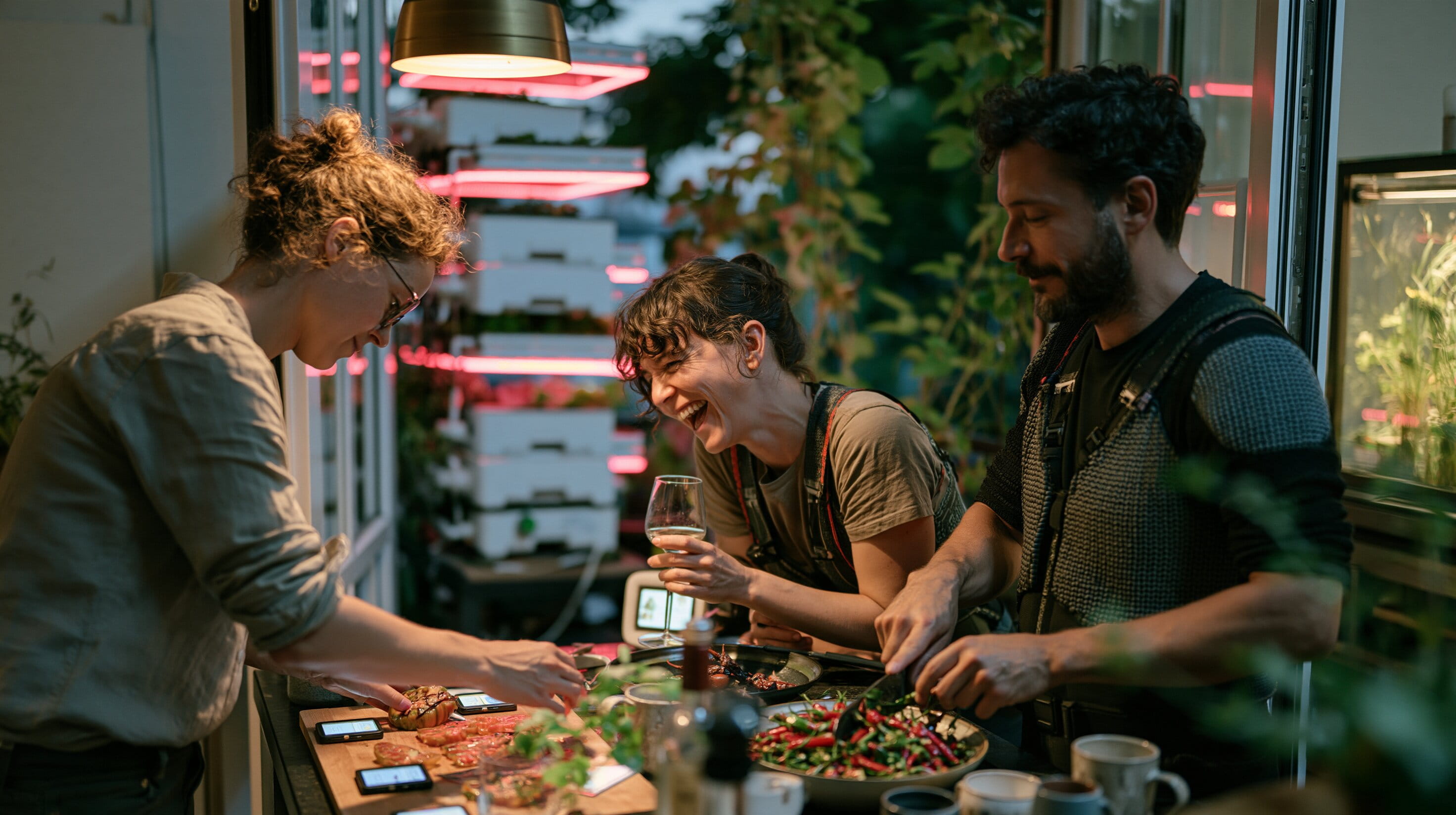
She is halfway through her first drink at the best place for a solo dinner guest: the kitchen counter, where her host is finishing dinner.
— Where's the little terror?
— Getting to sleep. Should be a few more minutes.
— I’ll drink to that. Wait, these are from your own batch?
— Yup. I wrote these tomatoes myself. The peppers as well. Help yourself.
— Wow. I’m happy to be a lab rat tonight.
— Okay. That's genuinely good. Slightly smoky?
— That's the umami tweak. Took me ages to stop making it taste like rubber. But wait for the kick.
— It’s spicy! How can a tomato be spicy?
— Tomatoes and chillies are cousins. The genes are already there. They're just not wired to run the same way in the fruit.
— So you’re just turning it on?
— I wish. Making it spicy without stressing the plant is the hard part. Those DIY models I use can suggest edits but still can't taste a tomato.
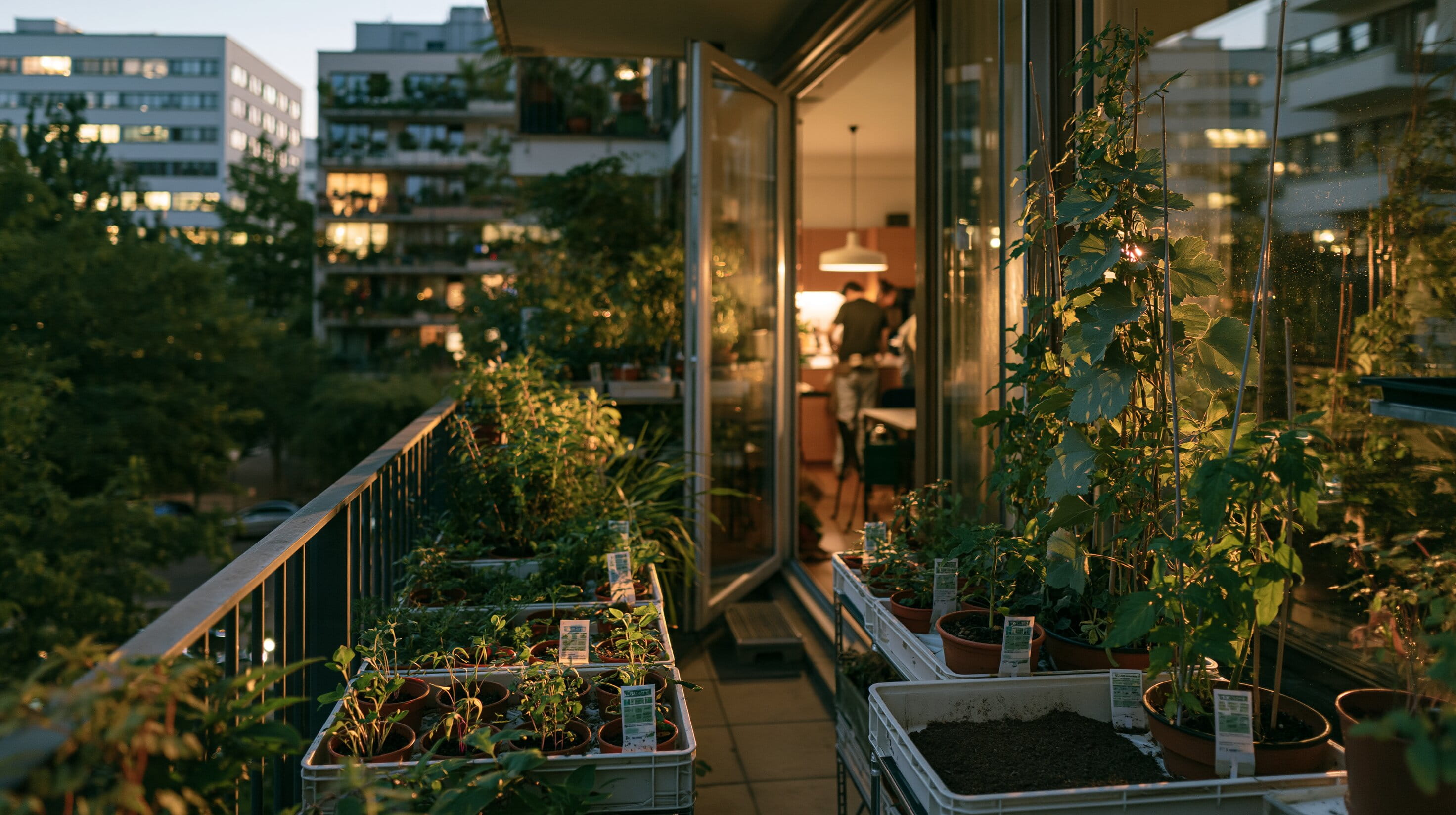
He nods towards the balcony. What used to be a narrow strip of plants is now a miniature greenhouse. Identical white trays fill the space, from barely sprouted seedlings to vines climbing thin supports. Every pot has a label.
— You say that like you've killed a lot of tomatoes. How many are out there?
— Sixty-three plants. Eleven recipes. I send my designs to a regeneration lab. They check them, regenerate the plants and send me seedlings. They mail me the seedlings, and I do the growing.
— That's a service now? Will they grow anything?
— Anything that clears home-grow. Everything else needs a proper research licence, but nobody regenerates those custom plants at home.
— This row is twenty-nine F, the smoky one. Those are the next version, which means less heat, more acid. And these are the sandwich ones. Same flavour, less drip.
— And these?
— Oh, those are a gamble. Someone published a fermented-tasting line last year. Seventy-something people have grown it now.
— Successfully?
— About half.
— So, you can just download somebody else's tomato?
— Not the tomato. The edit.
— That's somehow weirder.
— It's just gardening with version control.
— When did you start twenty-nine F?
— About nine months ago. I can tweak a gene expression profile, I mean a recipe in a few minutes, but then biology takes over. That's the annoying part.
— I would go insane.
— I did at first. One change, grow it out, taste it, then decide what to try next. Very sensible.
— That doesn't sound like you.
— Exactly. And one bad bet could cost me six months.
The labels lead them down the row.
— So now I stagger them. Some are still in the lab, some are seedlings, some are flowering, some are almost ready to taste. Every couple of weeks I start a few more.
— Even before you know whether the previous ones worked?
— Specifically before.
— So half of these could already be bad.
— More than half.
— And you're fine with that?
— They're tomatoes.
— Portfolio thinking?
— Exactly. If I had one tomato, I'd be terrified of growing it wrong.
Some plants are climbing out of their supports. Others barely seem worth watering. One pot contains nothing but soil and a label: 41B.
— What happened to forty-one B?
— Great aroma. Absolutely disgusting texture.
Beside the empty pot, 41D is doing considerably better.
— And forty-one D?
— Started before I'd even tasted B.
— You realise you've turned the balcony into an R&D department.
— Better survival rate.
The balcony door closes behind them. At the counter, the peppers are still waiting for the knife.
— So who decides which recipes are worth growing?
— Nobody. The labs decide what they're willing to build. That's mostly safety. Whether it's a good idea is our problem.
— So nobody coordinates this?
— Not until something works. But every recipe carries its grow history. You can see what actually worked, what failed and how many people reproduced it.
— And then?
— If something keeps working, commercial growers start paying attention.
— To some random balcony tomatoes?
— Why not? Enough independent growers, and they'll put it through proper trials. If one of my lines gets picked up, I get a cut.
— Ah. That's how you sold the greenhouse to your wife. How much have you made so far?
— That's not really the point.
He slides the peppers into a bowl. A muffled sound comes from the hallway. The kitchen goes quiet.
— False alarm. What's next?
— Maybe I'll join the crowd trying to stop coriander from bolting the moment it gets hot.
— Finally, a contribution to humanity.
— Thank you.
— This one really is good.
He finally tastes one himself. A note goes straight into his phone.
— Too smoky.
— You're impossible.
— No, listen. The heat is finally right, though.
— Of course it is.
The bedroom door opens just far enough to let his wife out, then clicks softly shut again.
— Sorry to keep you waiting. Harder than usual tonight.
She comes around the counter for a hug.
— Have I missed the tomato lecture?
— We're eating twenty-nine F.
His wife takes one from the board.
— Oh. This one's good.
— Thank you.
— Still too smoky.
— Exactly.
— Is this finally the one that's paying for the greenhouse?
— Potentially.
While his wife starts helping with dinner, she treats herself to another variety.
— So why do you do this, really? You could just buy decent tomatoes and call it a day.
Behind him, sixty-three plants crowd the other side of the glass.
— There’s no other hobby where you can eat something you wrote.