He loves me but won’t live in a drone-free area any longer
Pawel Halicki
The window view has always compensated for the size of their unit. The park outside is loud with afternoon birds, and the sky above it is empty in the way older neighbourhoods still advertise as peaceful. She wipes dust from the leaves of the air plant until its tiny status light settles back to green.
- Okay. If everything is fine, what am I picking up here?
- We moved into Grandma’s old unit because it was cheap and quiet. Paid off, quiet-zoned, no delivery lanes overhead, all very sensible. At least that’s what I thought. He’s been crunching for this promotion, so the last few months were brutal. We had a stupid argument at breakfast, and he snapped…
She looks at the messy plates still sitting where the argument left them.
- Hmm, sorry to hear that.
- He said…
She sighs, recalling the heated exchange.
- He loves me but won’t live in a drone-free area any longer. Grandma used to brag that nothing autonomous could cross the roofline. Now he talks about it like we live underground. He says the promotion means more live-fleet supervision, and operators outside active corridors get passed over. Everyone else trains on live corridors after hours, and he’s stuck doing delayed sims from a dead zone.
- And you were calm and reasonable this time?
She sniffles again, her eyes glossy.
- Oh, I got mad. I told him he’s not a frickin spaceship captain, he’s an operator with a theme pack. And after that wrist rebuild? Pro racing is not coming back.
- Hold on. A captain? Is he flying again?
She wipes her nose with a hand, smudging her visor. The comfort filter warms the room by half a shade, which somehow makes it worse.
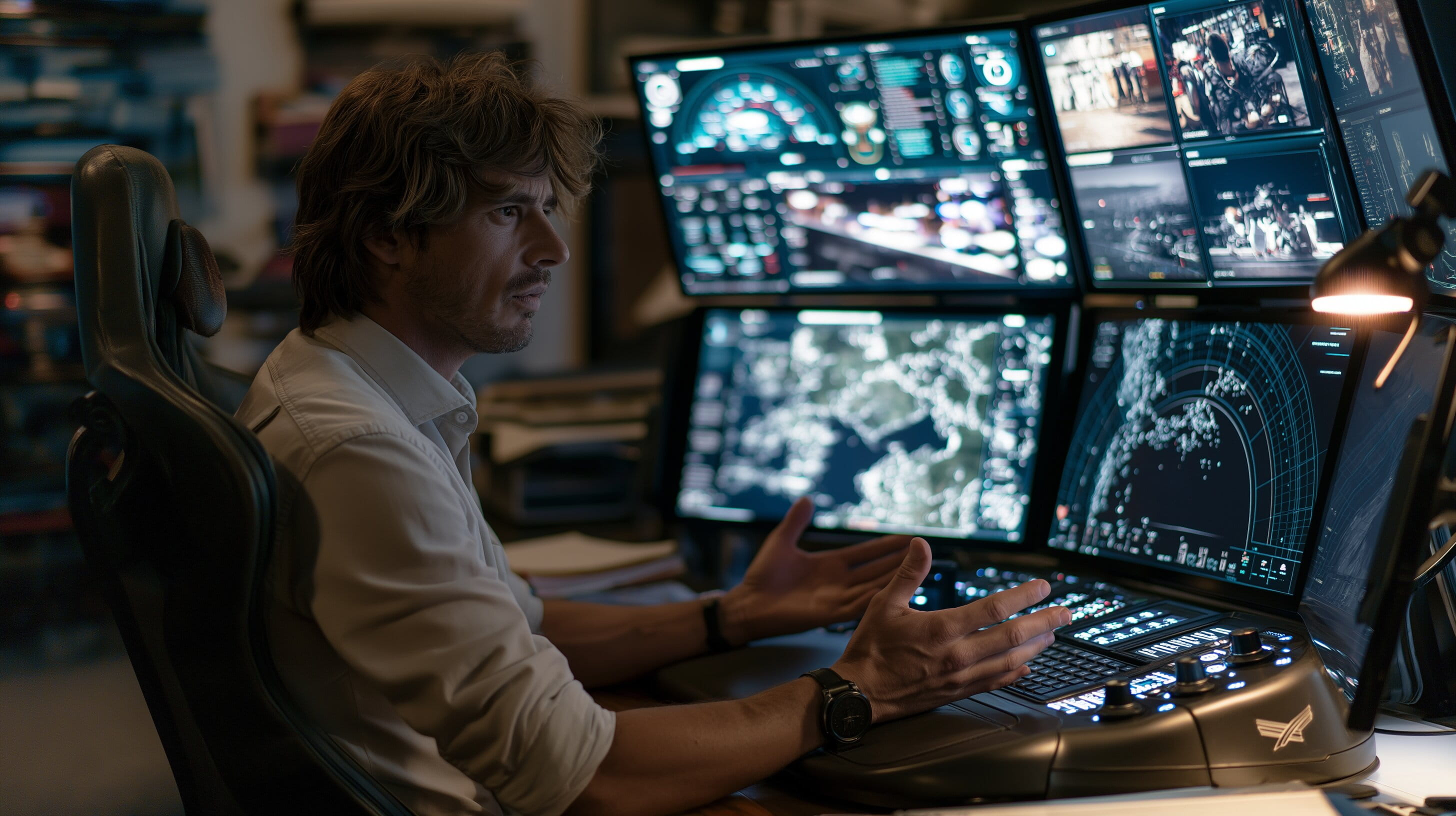
- Just a little. He supervises a fleet of cargo drones through a Starfleet command skin. He says the metaphors help him think faster.
- A command skin?
- Yes. His work setup talks like a bridge crew. When he coordinates deliveries, he shouts all day at his setup like it’s a space battle. Shields up for crosswind. Route seven, evasive manoeuvres. Engage medical priority!
- Sounds like a nerd’s dream, but maybe he just found a way to make stressful work feel playable?
- Yeah, he’s good. I tried to convert him to swarmball because it’s safer after the wrist rebuild, but he still races for money with friends, so it’s racing or nothing.
- Then forget the apartment for a second. There’s one question that matters.
She takes a loud, deep breath.
- Is this the part where I get to say my emergency phrase?
- Stop it, I’m serious. Does he make you a better person? If not, this is a good moment to think it over, especially as he may already have some galaxy-wide commitments as a Starfleet officer.
- And if yes?
- Then be curious about the person he becomes around you, and the person you become around him.
She chuckles, half reluctant, half amused.
- You prompted that, didn’t you?
- I asked for help with the phrasing. The wisdom was mine, and it’s true. Can’t you listen to your mother for once?

Memories to build from this future:
Go back to the last time you heard yourself defending a choice you'd made years ago. The reasons were still good. The logic still lined up. But somewhere mid-sentence, you noticed the words were doing more work than they used to.
Now, stay with that effort in your voice:
Try to recall the morning you realised a comfortable choice had put you too far from where everyone else was learning.
What had that choice protected you from at first?
Where did you first notice the delay shaping your sense of what was possible?
Which boundaries did you redraw between the comfort and the messy new experience?
Think back to the week your team ran the most challenging work through a fantasy workspace theme, and you noticed the theme becoming part of how the team operated.
What about the genre's vocabulary made difficult work feel faster, safer, or more playable that day?
Which team moments showed that people were no longer just using the theme, but thinking from inside it?
Who first noticed that the shared character was changing how the team made decisions, handled pressure, or spoke to each other?
Go back to the year you noticed every group of people you work with had quietly invented its own way to make challenging work feel worth doing.
How did each group build a language, ritual, or metaphor around its most challenging work?
Where did these inventions start showing up in how people across your field talked about the work?
Which inventions traveled between groups on their own, and which needed help to spread?
Before we close this one.
If what you're shielded from today became the experience you most needed tomorrow, what would you move closer to now?
What small step toward that would you be curious to try? And does anything from this one tie to ideas you've been carrying from other sessions?