Dreaming of a beach-ready brain?
Pawel Halicki
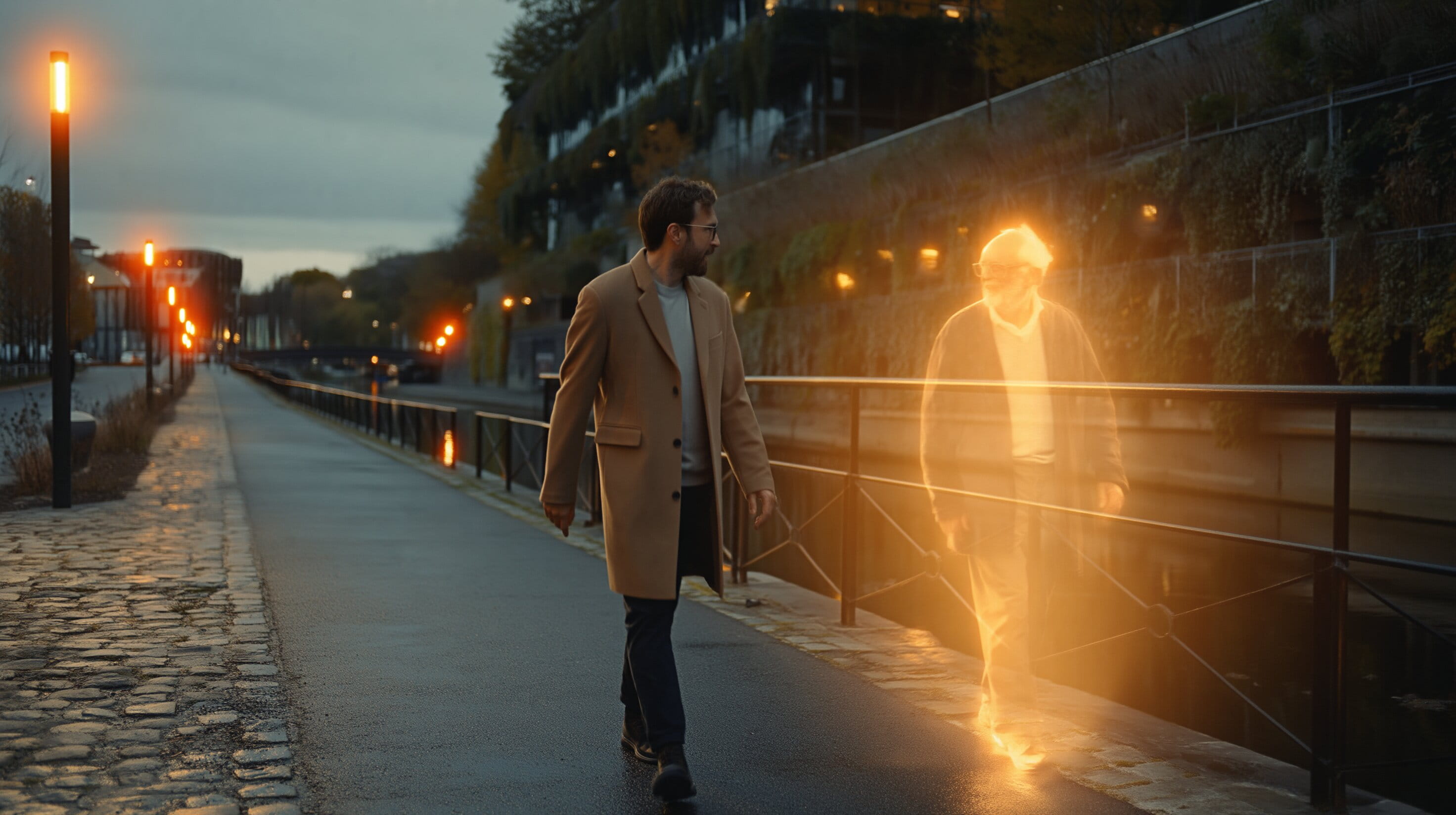
They walk along the canal at a pace that would make most people uneasy. Overhead, the sky is darkening by the minute.
- We’ve all been there working with team members who don’t need to rest: workflow stacking, packed overlays, clogged pipelines. When their context window gets heavy, they just spin up a new instance. You and I need coffee, lunch or a nap. So, let’s break down the neuroscience behind simple and effective mental resurfacing…
- Hold on. I need to take this.
The book companion at his side pauses and fades into courtesy translucency as he takes the call.
- Hi. Are you actually present, or just available?
- Hey, I’m here. I’m just on a walk.
- You’ve been going on a lot of walks lately?
- Yeah. I’ve been on companion editions lately. Tried them at home, tried them during chores, but walking mode works best for me.
- I know exactly what you mean. I use them whenever I’m stuck. It helps to have something that stays with you and applies the ideas to your real situation. Which book are you walking with?
- I think I finally figured something out. Rest isn’t passive for me anymore. I have to work my way into it. And honestly, I want this trip to be the best reset I get all year.
- Dreaming of a beach-ready brain? Don’t worry, at this rate, you’ll get one in no time.
- Thanks. I think all high performers stay good because they take recovery seriously. I’m good at what I do. I just haven’t built that resting part yet.
He nods as the translucent companion steps neatly over a dog leash on the pavement, its spatial sync good enough to make him forget for a second it isn’t real.
- Wait, I’m sending you something. It’s the best filter I’ve found lately.
A shared filter card folds open at the edge of his view, already marked compatible with his frames.
- Metadimmer?
- Yes, it’s excellent. Dims all the metadata and strips the world back to what matters to you in the moment. No ads, no labels, no visual nagging, even street names, unless your context needs them.
- Sounds like something I’m going to use a lot.
Then, a garden alert flashes in his frames. He glances up at the grey sky and the birds circling the trees.
- Listen, it’s going to rain here any moment now.
- Sure, sorry for the detour. Can I cash in that favour? Could you share your printable for the glass climbing gloves? The coating-calibrated version. I’ve tried everything, but I still can’t get it to work.
- Let me guess. The grip won’t hold?
- Not for long. I’ve tried different prints, different coatings. None of it holds.
- No problem. Just don’t fork it or pass it on. The provenance is locked on-chain. And I expect a glowing review.
- You’ve got it. See you at the gym.
When she disconnects, the book companion at his side solidifies again. At the first few drops, it opens an umbrella. Maintaining atmosphere, apparently, is part of the format.
- Sorry. Now that you’re getting soaked, I can see how that might look rude.
- I can live with your fake umbrella, just keep going.
Wet leaves squeak under his shoes. He taps the temple of his frames and flicks through the latest alerts.
- Shall we continue?
- Absolutely. Just checking whether the garden is routing this into the retention grid and reporting it properly.
- It’s been weeks since the last proper rain.
- Exactly. If it feeds the water supply grid, I want my credits logged.
- Monetising original cloud storage. Smart.
He snorts and shakes his head.
- Can we get back to the book, please?
- Right. Where were we? Ah, yes. The neuroscience behind effective mental resurfacing…
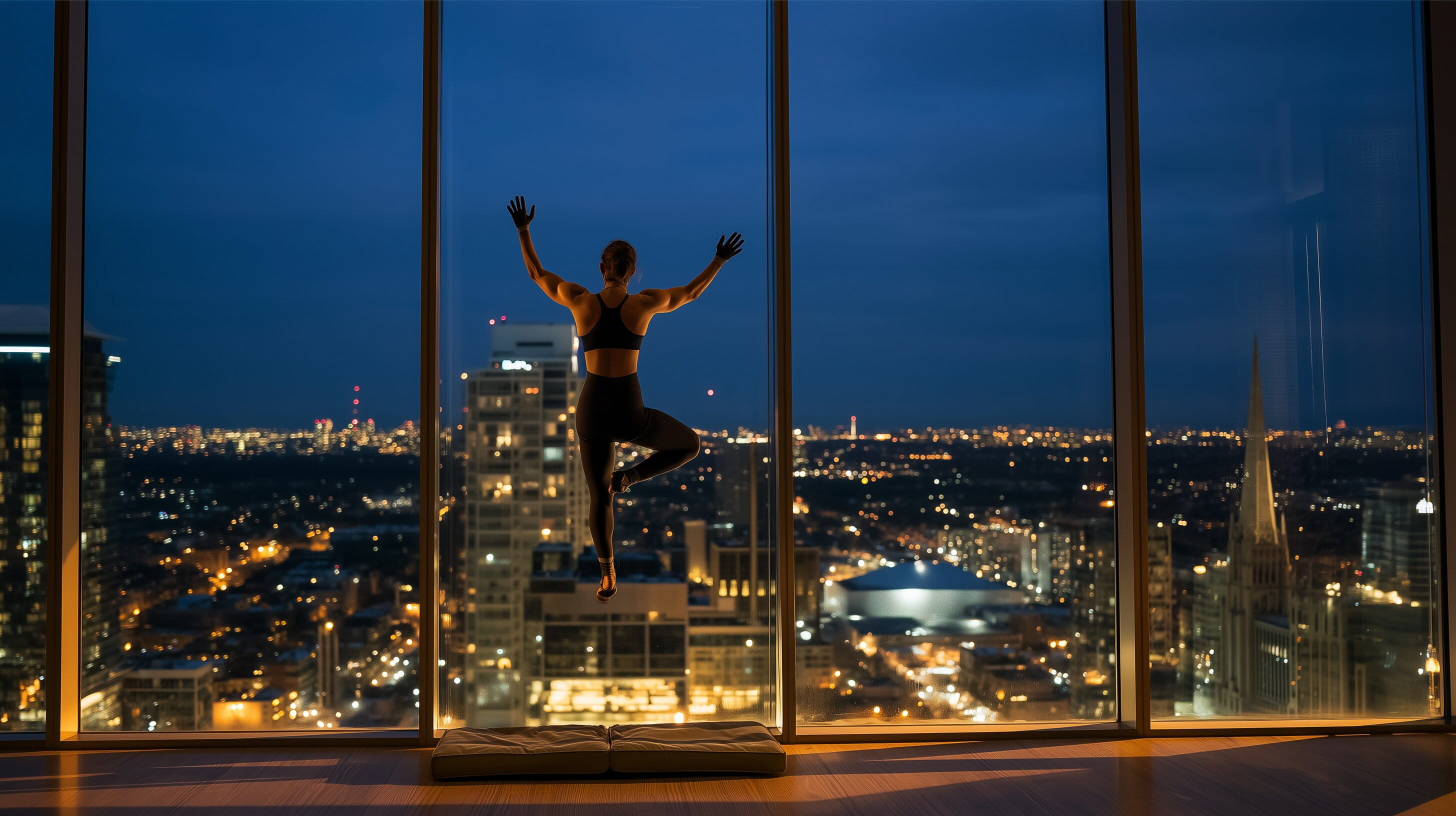
Memories to build from this future:
Think about the last time you walked somewhere while your attention was still stuck back where you came from. Your feet were moving at a good pace. Your phone was buzzing in your pocket. Someone was probably waiting to hear back. And somewhere underneath all of it, a quieter part of you was still trying to catch up with where you actually were.
Now, stay in that gap:
Think back to a regular week when practising rest was as deliberate as practising anything else you were good at, now that the tools around you never needed to.
What did you build into your days so recovery had somewhere to land?
How did your sense of staying sharp shift once yours was the only schedule in the workflow that still needed rest built into it?
Which signs told you your recovery practice was paying off in the kind of thinking no always-on system could replace?
Go back to a project your team ran where some of the work kept moving on its own around the clock, and other parts only happened when a person was in the room.
How did your team coordinate work between the side that kept running on its own and the side that needed a person there?
What did “doing it together” start to mean once a lot was happening at hours nobody was awake for?
Where did you draw the line so people weren’t on call just because some of the work never stopped?
Try to recall a year when the books, manuals, and courses your team relied on all came with a simulated person who knew the material and could walk you through it in the context of your actual work.
What changed when your whole team could sit with the same companion, and everyone could ask their own questions?
How did bringing someone up to speed shift once the material itself could walk them through it?
How did your team’s reporting, coordination, and decision-making change once the knowledge behind them had a voice of its own?
Last thing on this one.
If recovery were a skill you had to train instead of a gap you fell into, what would need to shift in how you build your week?
What would you try first? And does anything from this one connect to ideas from other sessions?